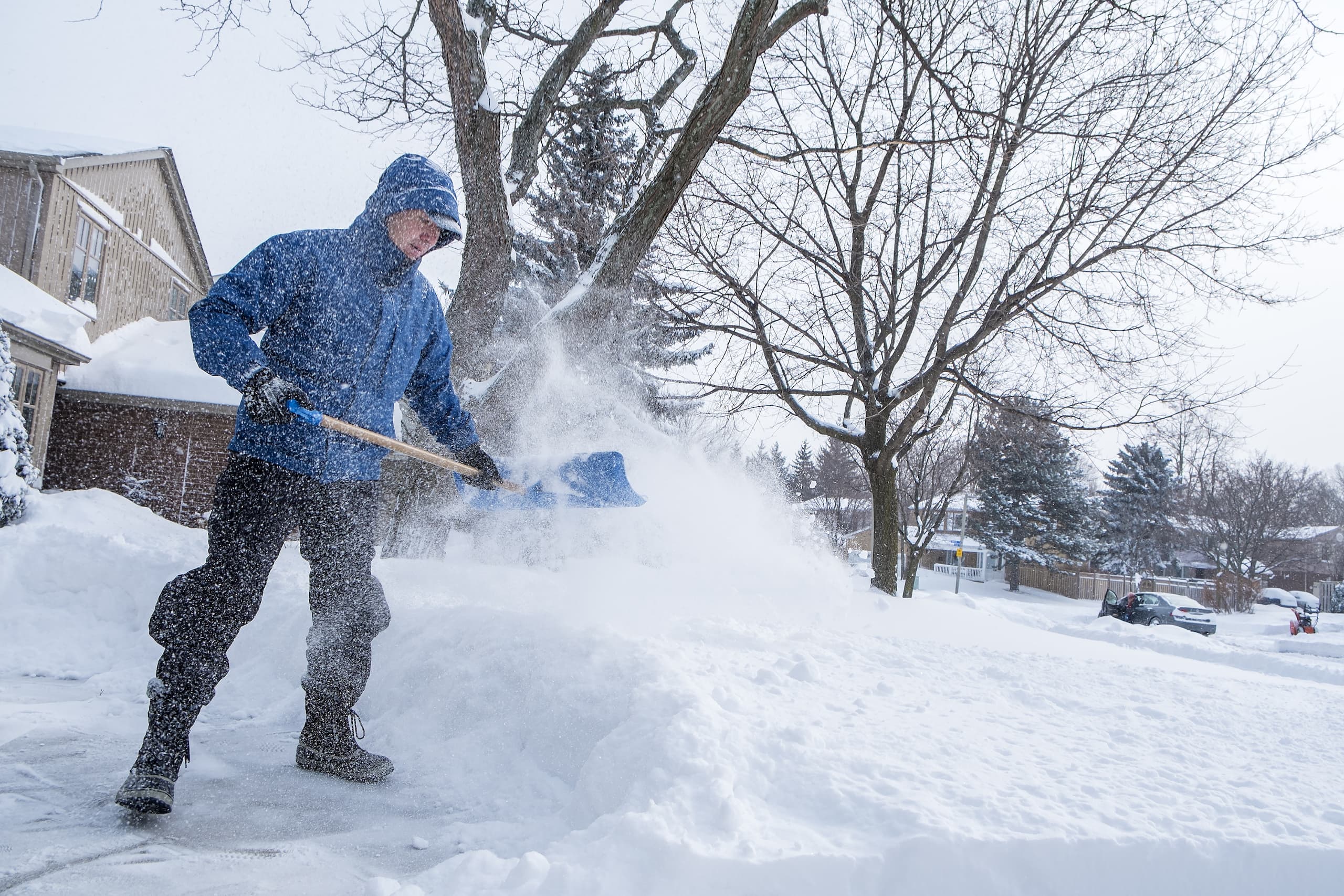
Snow removal is a regular part of Canadian winters
Although most times we do not think of the task as anything more than work to be done there is a high risk of injury or heart attack with shovelling snow. Injury risk is increased with sedentary lifestyles, having pre-existing injuries or cardiac issues, and overexertion. Research from the American Journal of Emergency Medicine shows that most injuries while shovelling snow are soft tissue related; specifically the lower back and shoulders. The risk of cardiac issues or heart attacks increases with moving snow due to the infrequency of snow removal and the high exertion needed to do so. Although it is an unending chore during the winter months, with preparation and planning it can be a quick job and your time can be spent efficiently.
Warm-Up
Cold weather increases heart rate and blood pressure, and adding high-intensity exercise without preparation increases cardiovascular strain. Gentle stretching or exercise before starting to shovel snow promotes blood circulation and prepares the muscles. Movement as simple as marching on the spot, side bends, or arm circles can be a great way to prepare the body.
Proper form
When using the shovel, try to keep your shoulders back and use your legs when moving snow. Reduce back strain as much as possible by not overloading the shovel and
keep abdominal muscles engaged to maintain balance on icy ground.
Take breaks
If possible, work with a partner or take regular breaks to allow your body to recover. Allow yourself enough time in the day to complete the task without feeling rushed, or consider completing the task over two days.
Push instead of throw
Pushing snow along the ground can help to reduce strain on the back and shoulders. Keeping your hips and torso square to the shovel can allow for a smoother push and more efficient movement.
Fresh snow
Trying to stay on top of shovelling snow limits the chances of snow packing and the job becoming even harder. If you are not home, consider asking a friend to clear the snow for you.
Choose your equipment Wisely
Using a shovel that is the right size, or an ergonomic shape reduces the strain of bending. If you are working on a very large area consider a snowblower. Equipment includes clothing too; wear proper fitting and layered winter clothing to keep you warm and well-fitting winter boots to prevent falling on ice.
There is always a risk to any exercise or activity, but with proper technique, we can manage the risks and prepare ourselves properly.
What happens if I do get injured?
Unfortunately, not all injuries can be prevented. When you are needing to get back to work, taking care of loved ones, or your weekend warrior activities, you do not want to stay down for long. Venture Rehabilitation Sciences Group can evaluate your injury and set you up with the right treatment plan to get you back to the things you enjoy. Our university-trained therapists use skilled manual techniques, modalities, and individualized exercise plans to get you back on your feet. Do not let a snow shovelling injury keep you down. Contact Venture Rehab today! We offer same-day appointments and are happy to aid you in your recovery.
Written by Kelsey Bohachewski, B.Sc.(Kin), C.E.P.